
Active weather alerts
Loading alerts from the National Weather Service…
Live radar: South Florida
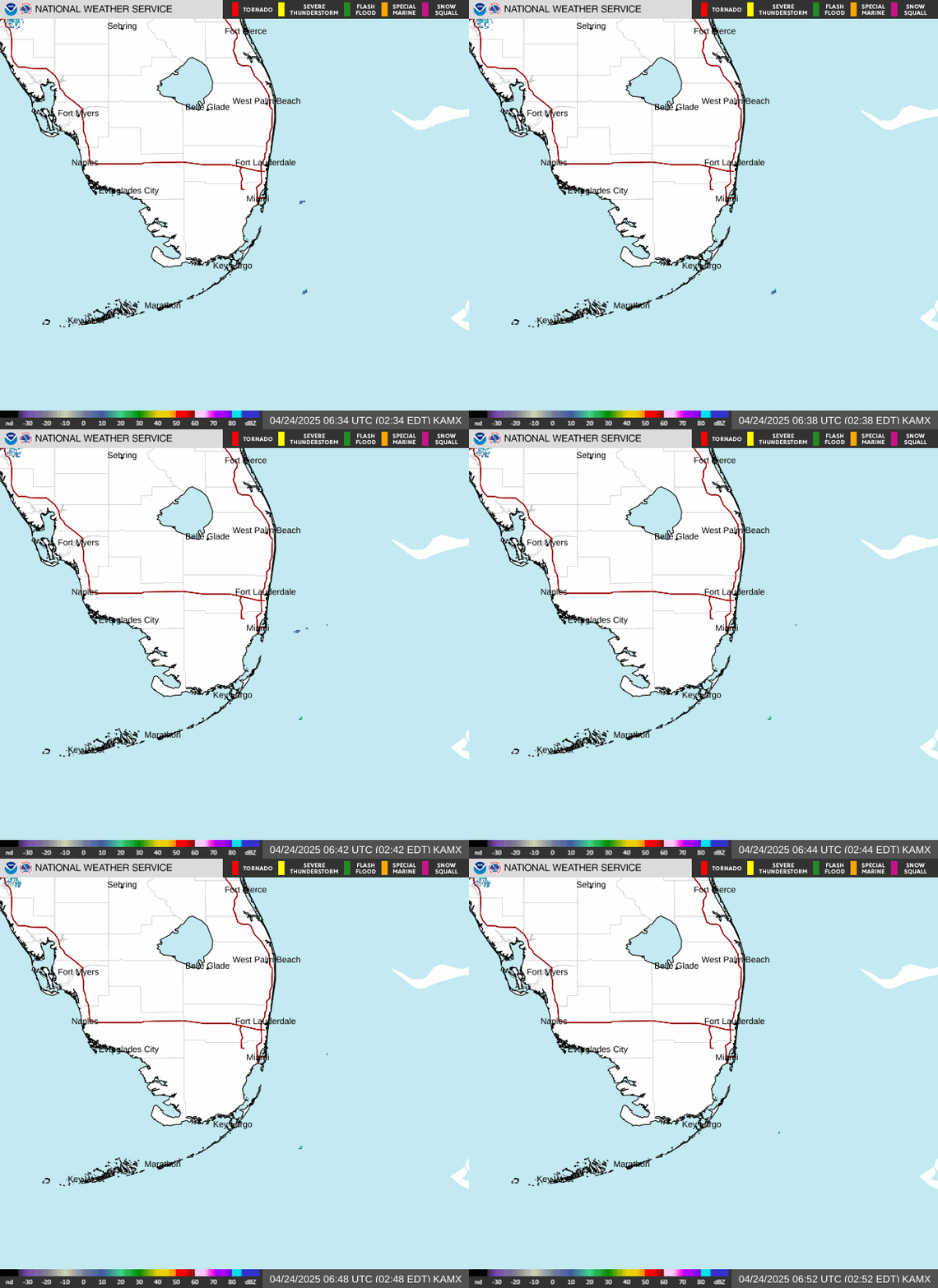
National Weather Service Miami radar loop, refreshed automatically every 5 minutes. Treasure Coast? See the full interactive radar ↗ or the Melbourne radar ↗.
7-day forecast
Loading forecast…
Forecast from the National Weather Service Miami ↗. Blue-topped days have a 50% or higher chance of rain.
Tropics: 7-day outlook
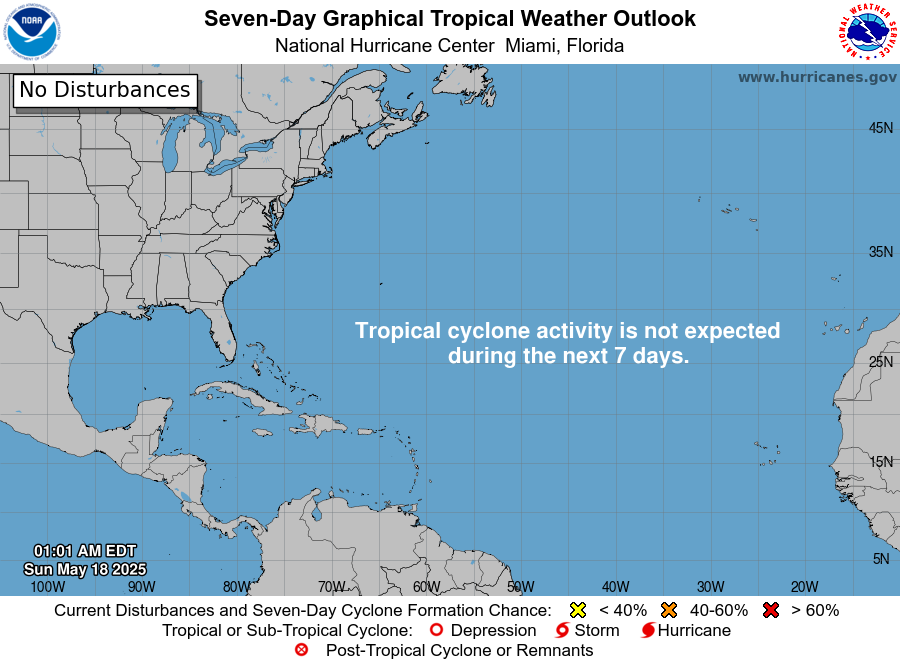
From the National Hurricane Center ↗. Atlantic hurricane season runs June 1 to November 30.
Torrential rain: why roofs leak in a Miami downpour
South Florida can get several inches of rain in a few hours, often with gusty wind driving it sideways. That's when weak spots show up, even on roofs that seem fine the rest of the year:
- Flat roofs and ponding. Water that can't drain fast enough sits on flat sections over additions, porches and carports, and finds every seam. Clogged drains and scuppers make it worse.
- Old underlayment under tile. On tile roofs 20 or more years old, the tile sheds most water but the underlayment beneath has dried out and cracked. Heavy rain overwhelms it.
- Flashing at walls, chimneys and skylights. Wind-driven rain gets behind worn or loose flashing.
- Valleys and gutters clogged with leaves back water up under the roof edge.
More detail: Roof leaking after heavy rain? What to do now →
Your roof is leaking right now: what to do
- Protect the inside. Move valuables, put down buckets and towels. If a ceiling is bulging with water, keep people away and consider a small hole to drain it into a bucket.
- Stay off the roof in rain, wind or lightning.
- Take photos and video of the stains, drips and any visible damage, with dates. You may need them for insurance.
- Check the attic with a flashlight if it's safe, and note where the water is coming in.
- Call us at (305) 900-8297 or book a leak inspection below. We find the real source, give you a written price and repair it within 48 hours of your approval, weather permitting. Roof leak repair →
Before a storm or hurricane
- Clear gutters, drains, scuppers and valleys.
- Trim branches that hang over the roof.
- Look for cracked or slipped tiles, lifted shingles and loose flashing, and fix them before the season.
- Photograph your roof now, so you have a "before" record for insurance.
Full hurricane season roof checklist →
After a storm or hurricane
- From the ground, look for missing or broken tiles and shingles, debris and damaged flashing.
- Check ceilings and the attic for new stains over the next few days. Leaks don't always show right away.
- Document everything before any repairs, and contact your insurance company.
- Be careful with door-knockers who show up after storms. Hire a licensed, insured, local roofer and check the license at myfloridalicense.com ↗. Ours is #CCC1330874.
We inspect, photograph and document storm damage for your claim. Storm damage repair → · My Safe Florida Home → · Roof inspections →
Storm Center FAQ
Why does my roof only leak in heavy rain?
Small openings around flashing, worn underlayment or seams on a flat roof may stay dry in light rain but let water in when a downpour or wind-driven rain overwhelms them. Clogged drains and gutters can also back water up under the roof.
How fast can you fix a roof leak?
We inspect as soon as we can during business hours, give you a written price, and schedule the repair within 48 hours of your approval, weather permitting.
Will insurance cover my roof leak?
It depends on your policy and the cause. Storm damage is often covered; wear and tear usually isn't. We document the roof with photos to help you file a claim. Check with your insurance company.
Where does this weather data come from?
Radar, forecasts and alerts come from the National Weather Service, and the tropics outlook from the National Hurricane Center. Always follow official warnings and local emergency management.